Table of Contents
PVC hose structure is often the hidden factor behind many hose failures in industrial applications. Many importers carefully inspect the first sample. The hose looks fine, the pressure test passes, and the shipment goes out. Everything seems safe—until a few months later when complaints start arriving: hoses burst under pressure, layers begin separating, and distributors demand explanations.
The problem often isn’t the PVC material at all. It is the hose structure—the part many buyers never see or evaluate. When structural design is not engineered for real working conditions, even good materials cannot prevent failure. And by the time the problem appears in the field, the cost is already measured in claims, lost customers, and damaged reputation.
I. PVC Hose Structure Protecting Air Systems from Pressure Spikes
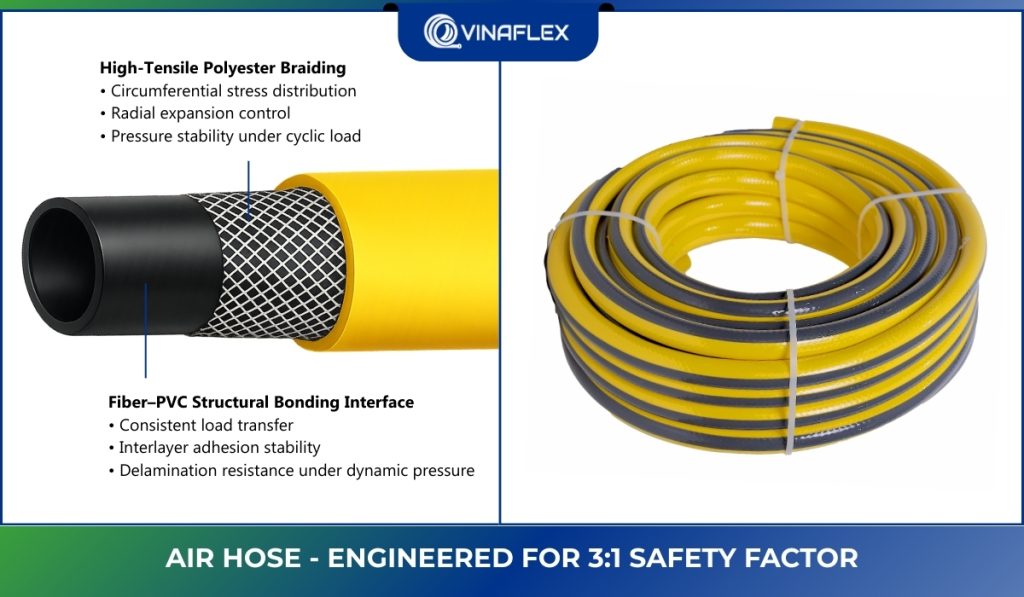
In compressed air systems, a hose behaves like a thin-walled pressure vessel. It must withstand “Hoop Stress” (radial expansion force).
The Formula for Pressure Resistance: σh = (P × r) / t
(Where P = pressure, r = radius, t = thickness)
Without high-tenacity reinforcement, internal pressure causes the PVC wall to expand and eventually burst.
The VinaFlex Solution: We integrate High-Tenacity Polyester Braided Reinforcement into the PVC wall. This architecture ensures:
- Burst Resistance: Achieves Burst Pressure (BP) of 60–75 Bar.
- Stable Operation: Handles Working Pressure (WP) of up to 20 Bar.
- Safety Margin: Maintains a 3:1 Safety Factor, critical for industrial safety.
II. Multi-Layer Architecture: Engineering for Harsh Environments
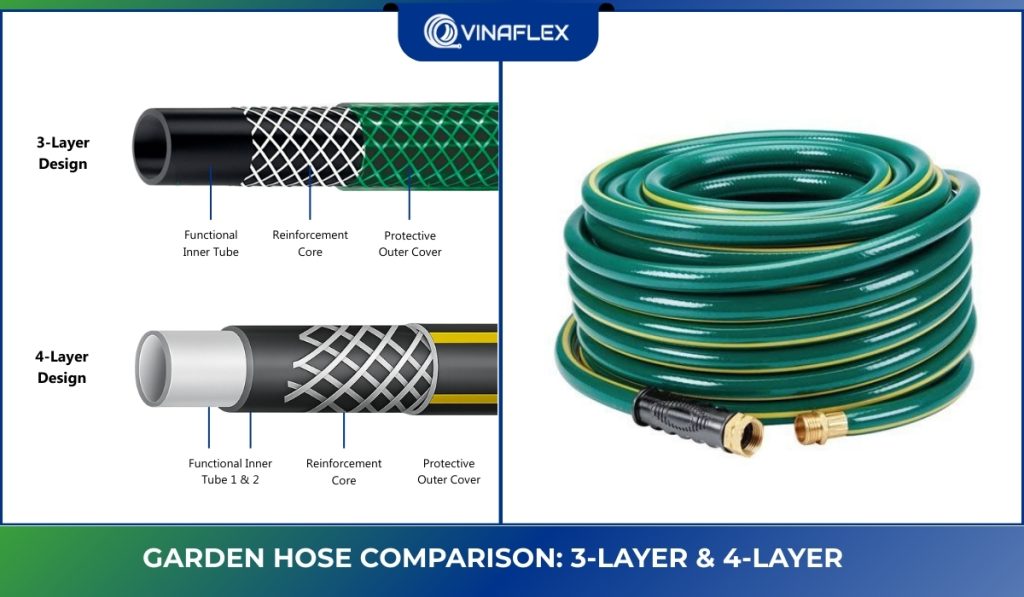
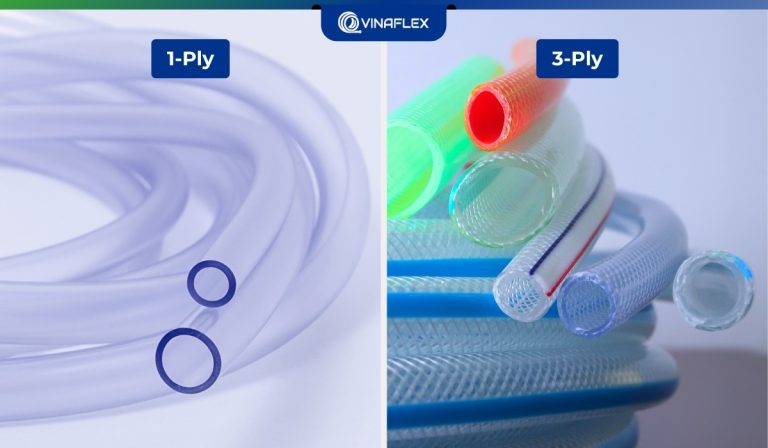
Irrigation hoses face “Environmental Stress” rather than extreme pressure. A single-layer hose cannot handle UV, abrasion, and chemicals simultaneously.
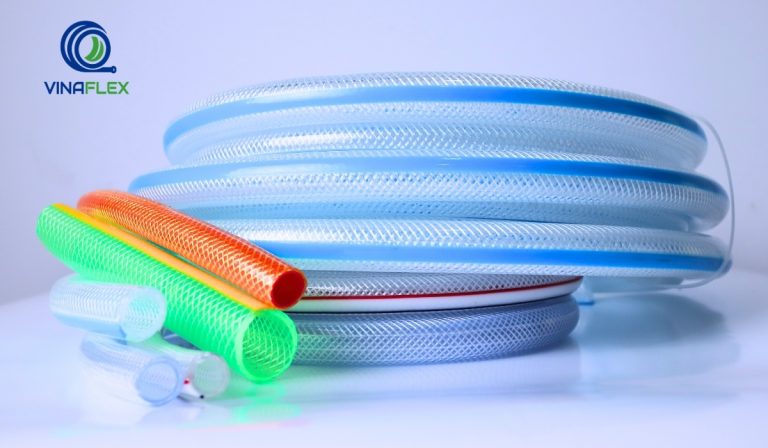
VinaFlex 3–4 Layer Technology: We separate mechanical functions into distinct layers. The inner layer ensures smooth flow and chemical compatibility, while the bonding layer prevents internal delamination (layer separation). The outer cover uses PVC with UV resistance and abrasion protection to withstand outdoor conditions.
This architecture ensures the hose remains flexible at −10 °C and stable at 65 °C without cracking.
III. Durability is a Result of Material Consistency
Structural integrity fails if the material is inconsistent across batches. VinaFlex eliminates this risk through Vertical Integration within Nhat Huy Group.
Through in-house PVC compounding, VinaFlex produces its own raw materials to ensure 100% batch-to-batch consistency. In manufacturing, precision extrusion with 10 automated lines ensures uniform wall thickness, helping reduce stress concentration zones and maintain stable structural performance.
Our products are also validated by internationally recognized standards including ISO 9001:2015 (Quality Management), REACH & RoHS (Chemical Compliance), FDA (Material Safety), and PFAS Free (Environmental Sustainability), ensuring consistent product quality and material reliability.
IV. The VinaFlex Advantage: Sustainable Supply & Technical Confidence
Choosing a supplier that relies on third-party compounds is a gamble. VinaFlex offers a Structural Economic Moat by controlling everything from material formulation to the final extrusion.
For importers, this means:
- Stable mechanical performance in every meter.
- Fewer claims and higher dealer satisfaction.
- Predictable lead times from an integrated Vietnam-based ecosystem.
Discover VinaFlex’s Parent Group: Nhat Huy Group
Don’t let engineering mistakes devalue your brand.
Contact the VinaFlex team to discuss the right hose structure for your application