In modern manufacturing, an invisible fluid line is a severe operational risk. Relying on opaque pipes means early warning signs, such as air bubbles, blockages, or contamination remain undetected until machinery stalls or production batches are ruined.
To address this, industrial engineers often use Clear Hoses (Clear PVC Tubing) as real-time diagnostic tools. However, achieving high-performance transparency requires more than just “clear plastic.” Depending on the pressure dynamics and environment, buyers must carefully select between non-reinforced and braided constructions.
In this technical guide, VinaFlex breaks down the core differences between 1-Ply and 3-Ply clear hoses, helping you specify the exact structural integrity required for your operations.
Table of Contents
What is a Clear Hose?
A clear hose, often referred to as clear PVC tubing, is a flexible conduit made from high-purity PVC compounds. Its defining feature is a crystal-clear wall that allows for 100% unobstructed visual monitoring of the materials passing through it. Unlike traditional solid-colored pipes, these hoses act as a window into the machinery, helping maintenance teams detect anomalies instantly.
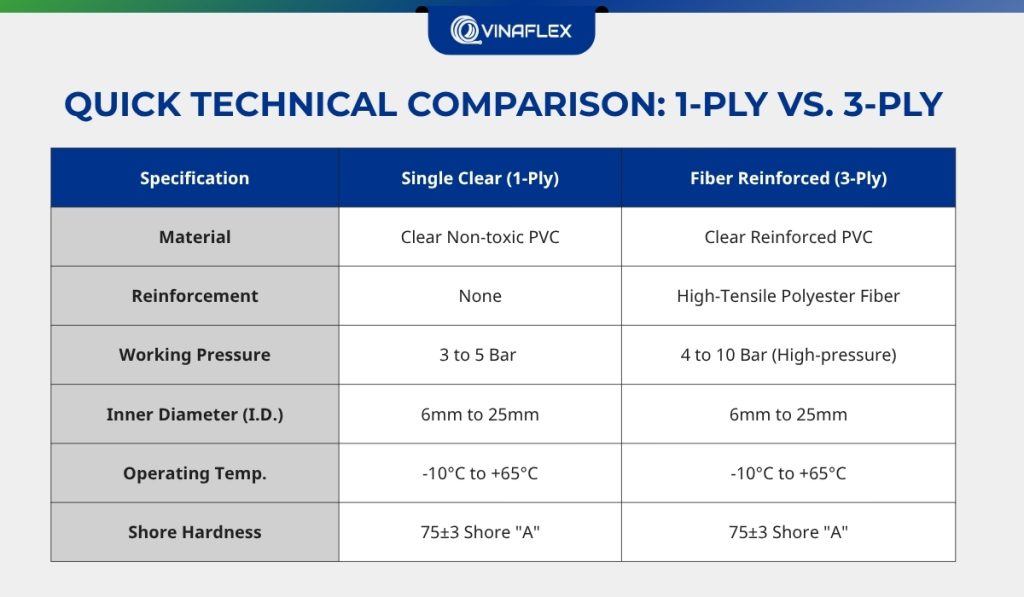
Before diving into the mechanical breakdown and specific applications, here is a quick technical comparison of the two primary structures available at VinaFlex.
Clear Hose Comparison: 1-Ply vs. 3-Ply Structure
1. The Baseline: Single-Layer (1-Ply) Clear PVC Hose
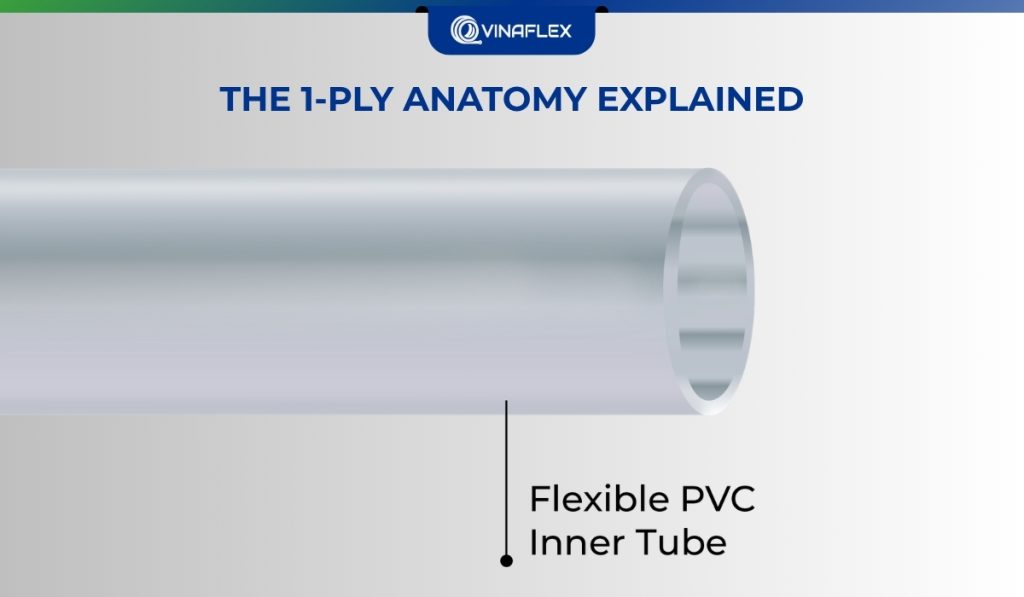
For applications where high pressure is not a factor, a single-wall extrusion offers the highest degree of flexibility and cost-efficiency.
The Science of Clarity
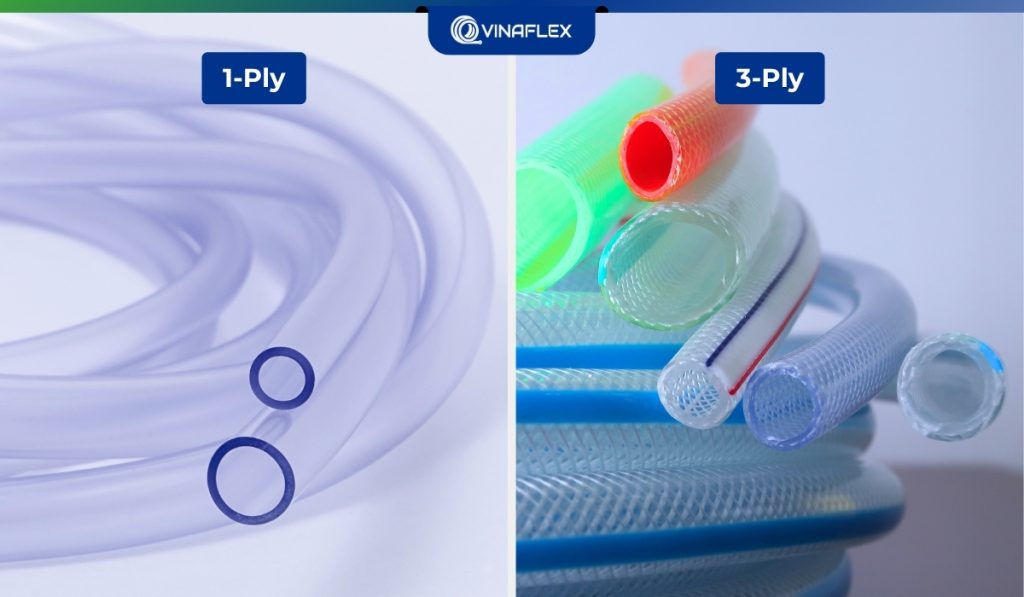
A 1-Ply clear hose is an unreinforced tube extruded purely from high-gloss vinyl. Without an internal mesh layer blocking the view, it provides an absolute “mirror finish” interior and crystal-clear exterior walls. This prevents sediment buildup and ensures operators can conduct flawless visual audits of the fluid stream.
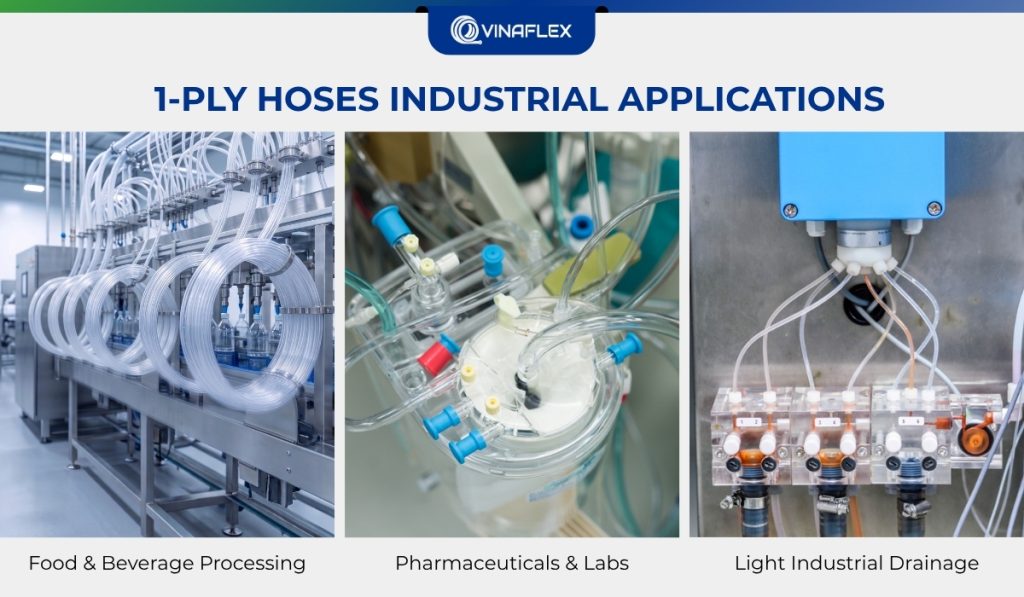
Ideal Industrial Applications
Because it lacks structural reinforcement, the 1-Ply hose is engineered for flexibility rather than force. It is the perfect diagnostic tubing for lightweight tasks, siphon lines, and gravity-fed systems:
- Food & Beverage Processing: Transferring liquids where material purity and visual inspection are mandatory.
- Pharmaceuticals & Labs: Safely moving sensitive, low-pressure fluids without contamination.
- Light Industrial Drainage: General fluid discharge without mechanical stress.
2.The Industrial Standard: 3-Ply Reinforced Clear Hose
When operations require both visual monitoring and the ability to withstand heavy mechanical stress, a standard clear tube will balloon and eventually burst. This is where reinforced engineering becomes critical.
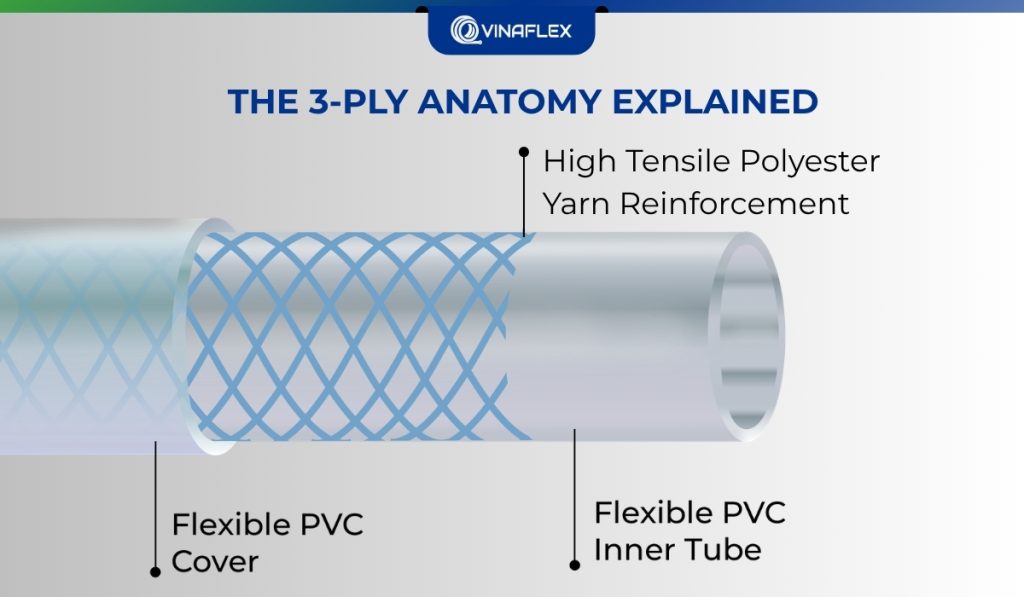
The Anatomy of Braided Reinforcement
To handle demanding environments, premium clear hoses utilize a 3-ply construction. At VinaFlex, we embed multiple layers of high-tensile polyester fiber between the inner and outer clear PVC layers. This strong braided net locks the hose’s cylindrical shape in place, preventing it from expanding under high pressure while still maintaining excellent visibility to see the “action” inside.
Mastering Heavy-Duty Applications
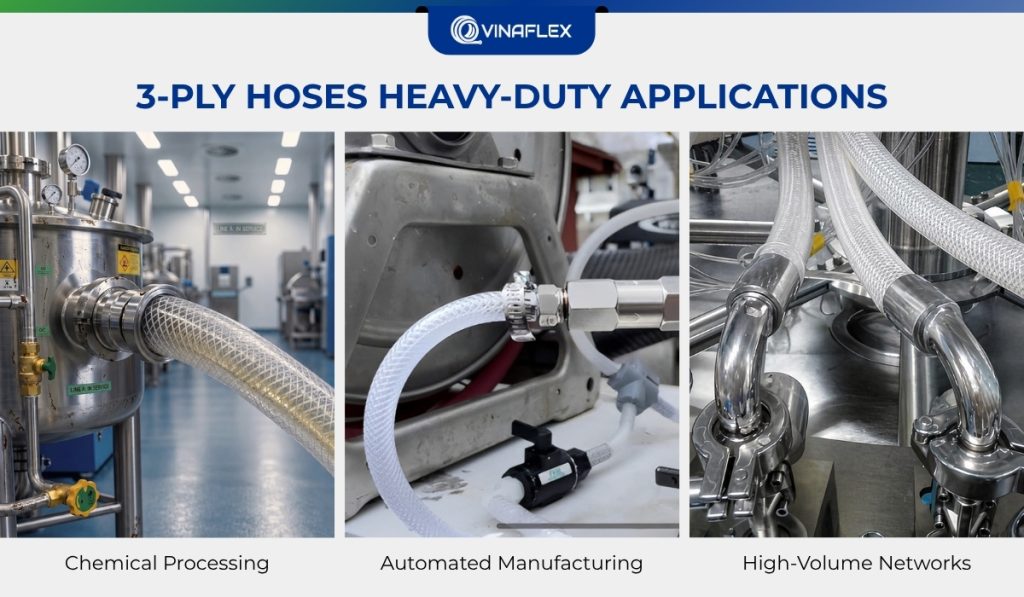
By reinforcing the core, a 3-Ply clear hose safely sustains a Working Pressure ranging from 3 to 10 Bar. This robust mechanical strength makes the braided variation the definitive choice for demanding environments:
- Chemical Processing: Safely monitoring aggressive fluid transfers.
- Automated Manufacturing: Heavy-duty pneumatic cooling lines.
- High-Volume Networks: Factory air and water supply systems where pressure fluctuates.
3.Core Material Standards for Both Variations
Whether you specify a non-reinforced or braided hose, the baseline material science must protect the flow.
Flexibility Retention
A hose that kinks is a hose that fails. Kinking restricts flow and creates severe pressure points. Both variations of VinaFlex clear hoses are formulated with a precisely engineered 75±3 Shore “A” hardness rating. This ensures the tubing keeps its structural integrity under vacuum or pressure while remaining flexible enough to bend around tight machinery corners.
Material Purity & Chemical Resistance
In sectors where purity is the law, clear hoses must be completely non-toxic. Our hoses are engineered to be Phthalate-Free and PFAS-Free. The premium PVC compound offers excellent chemical resistance against alcohols, fats, oils, and weak acids. More importantly, our material formulations strictly comply with FDA and NSF-51 standards for food-grade safety, alongside REACH and RoHS environmental directives.
4. The Manufacturer’s Edge: Securing Your Supply Chain
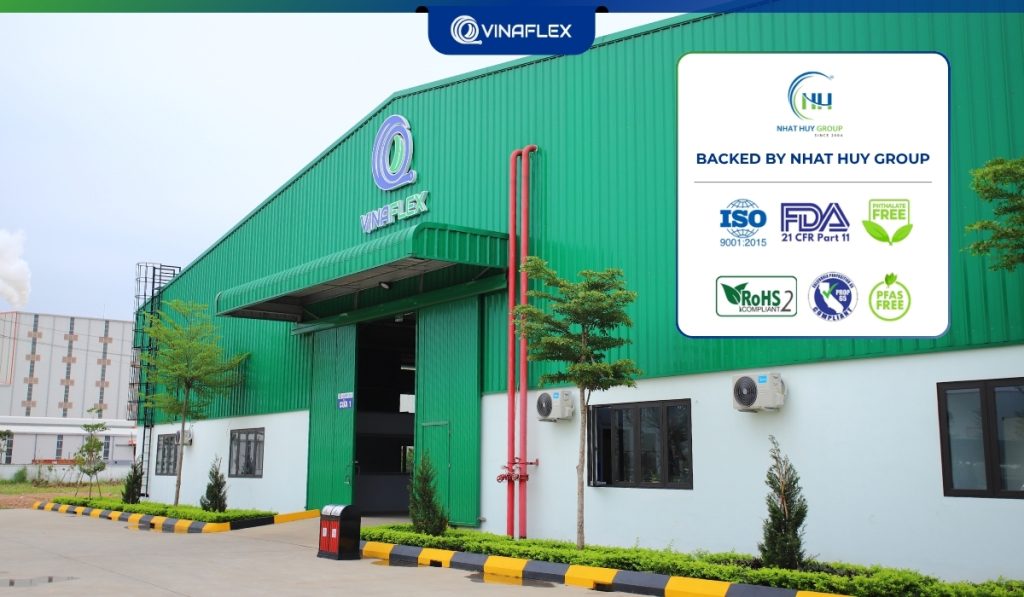
For global importers, the reliability of a clear hose starts at the molecular level. Relying on third-party raw material suppliers often leads to inconsistent clarity and fluctuating pricing.
Backed by the robust infrastructure of the Nhat Huy Group, VinaFlex maintains complete autonomy over our PVC Compound supply chain. This upstream control means we dictate the physical strength, clarity, and safety factors of the material from the very first step.
By eliminating external dependencies for our core materials, we guarantee our global partners a stable, continuous supply of premium hoses strictly certified to ISO 9001:2015, RoHS, REACH, and FDA standards.
Conclusion
Selecting the right clear hose is a strategic decision that impacts factory safety and maintenance costs. By correctly choosing between a flexible 1-Ply clear tube for gravity feeds or a 3-Ply braided hose for high-pressure operations, you optimize your fluid transfer systems for maximum performance.
Stop guessing what is happening inside your systems. Upgrade to clear monitoring with a direct manufacturer.
Want to dive deeper into exact sizes and custom OEM configurations?
👉 Read our comprehensive technical guide here:
The Engineering Guide to Clear Hoses: Construction, Technical Specs & Material Purity